


Daon Introduces Five-Patent Quantum Identity Architecture for the Next Era of Digital Trust
Daon is pioneering a patent-backed, data-plane approach that complements post-quantum cryptography by determining whether biometric evidence is real, live, transaction-bound, and resistant to manipulation, injection, and replay.
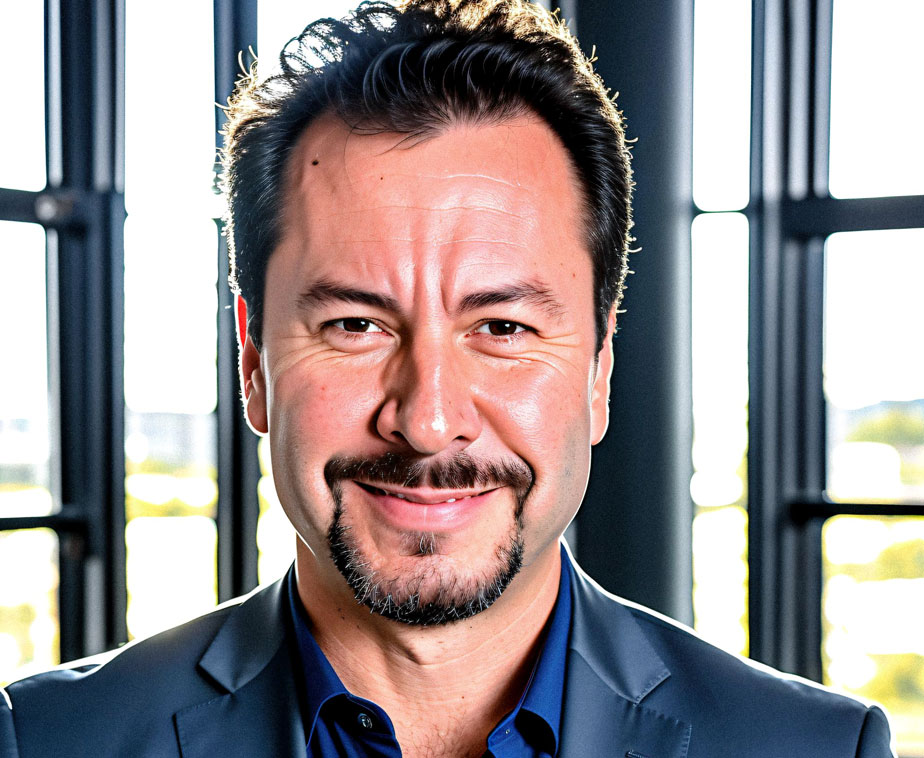
Ralph Rodriguez
President & Chief Product Officer
Ralph A. Rodriguez is President, Chief Product Officer (CPO), and a member of the Board of Directors for Daon. He is accountable for defining the go-to-market vision, strategy, and roadmaps for Daon’s products and technology.
Ralph was most recently an Executive-in-Residence at Summit Partners, a Boston-based private equity firm. Previously he was a Research Scientist and Head of Identity Verification at Facebook, where he oversaw Applied Identity Intelligence. Ralph was also the co-founder and chief technology officer of Confirm.io, an identity verification and authentication company acquired by Facebook in March 2018. Ralph founded Blue Hill Research, Delfigo Security, Invenio, and NTA before Confirm.io. In addition, he was the CTO/CIO of public companies Brooks Automation (NASDAQ: BRKS), C-bridge Internet Solutions (NASDAQ: CBIS), and Excelon Corporation (NASDAQ: EXLN).
As the longest-serving Fellow at the Massachusetts Institute of Technology (MIT), Ralph pioneered research on artificial intelligence (AI), cloud, mobile, neural science, and security technologies at the MIT Media Lab and Harvard-MIT Health Sciences and Technology (HST) departments.
Ralph studied for an Sc.D. in information systems and is a graduate of the management program GPMD-MBA at IESE Business School, Barcelona, Spain. He served in the United States Army during the Persian Gulf War in 1990 and was named Soldier of the Year by the 10th Mountain Division (Light Infantry) in 1987. Ralph holds a portfolio of 68 patents globally, including 37 issued U.S. patents, 2 additional U.S. patents pending, 4 international patents issued, and 27 other international applications pending. His innovations span identity verification, biometrics, deepfake detection, agentic-AI, and quantum-enhanced fraud prevention.
August 6, 2026
FAIRFAX, Va., August 5, 2026 – Daon®, The Digital Identity Trust Company, today introduced its Quantum Identity architecture, a patent-backed approach designed to help future identity systems determine not only whether cryptography remains secure, but whether the biometric and authentication evidence entering the system is genuine. Backed by five issued US patents, the architecture addresses a critical challenge for the next generation of digital identity – cryptography can protect data and decisions, but it cannot determine whether the evidence being protected was trustworthy in the first place.
Much of today’s publicly visible quantum-security activity focuses on post-quantum cryptography (PQC), which is essential to protect keys, signatures, credentials, certificates, and communications against future quantum attacks. Daon’s complementary data-plane approach to Quantum Identity addresses the evidence that enters the identity system and the signals used to determine what the enterprise should trust.
This matters because cryptographic protection alone cannot determine whether biometric evidence is genuine, live, or belongs to the current transaction. Quantum-safe signatures can protect a channel or decision record, while Daon’s Quantum Identity architecture is designed to help assess the evidence that informs the decision before the enterprise acts.
“Quantum Identity is not a single algorithm, and it is not simply PQC,” said Ralph A. Rodriguez, President and Chief Product Officer at Daon. “PQC strengthens the cryptographic control plane: keys, signatures, certificates, and protected records. That’s essential, but it secures the messenger, not the message. An identity system also needs confidence that the evidence itself is genuine. Our five issued patents establish that complementary data-plane foundation, detecting manipulation, evaluating high-dimensional fraud signals, and determining whether evidence is live, current, and bound to the transaction taking place rather than injected, cloned, or replayed. Together, these capabilities produce the evidence that future identity systems can interpret under trustworthy decision controls.”
The architecture is backed by five issued U.S. patents spanning foundational morphing defense, quantum-enhanced morphing detection, quantum identity verification, quantum liveness, and quantum injection and replay resistance. Each names Daon President and Chief Product Officer, Ralph A. Rodriguez, as sole inventor and is assigned to Daon Technology. Together they form a progression that asks, in sequence:
- Is the biometric evidence manipulated?
- Can quantum feature-space methods help separate difficult fraud patterns?
- Is the authentication data genuine enough to trust, or does it require further verification?
- Were the signals captured as part of a live, contemporaneous event?
- Was the quantum-encoded evidence generated for and bound to the current transaction, rather than injected, cloned, or replayed?
The five patents create a logical progression from today’s biometric fraud controls toward a broader quantum identity data plane:
| Control layer | Patent contribution | |
| 1. Foundational Morphing Attack Detection | US 12,307,826 Issued May 20, 2025 |
Establishes the classical foundation for detecting manipulated biometric evidence using high-dimensional feature distributions, sensor-noise analysis, frequency decomposition, temporal behavior, multimodal consistency, and adversarial retraining. |
| 2. Quantum Morphing Attack Detection | US 12,450,952 Issued Oct. 21, 2025 |
Extends morphing attack detection into qubit encoding and high-dimensional quantum feature spaces, applying quantum algorithms to static, temporal, landmark, sensor-noise, and multimodal evidence. |
| 3. Quantum IDV | US 12,413,402 Issued Sept. 9, 2025 |
Applies quantum feature-space methods to biometric and document authentication data, detects anomalies associated with synthetic or manipulated evidence, calculates confidence, supports secondary authentication, and addresses NISQ error mitigation and post-quantum protection. |
| 4. Quantum Liveness | US 12,647,416 Issued June 2, 2026 |
Uses quantum and hybrid analysis of contemporaneous multisensor biometric signals to generate liveness indicators and support controlled degraded-mode evaluation when a sensor signal is unavailable. |
| 5. Quantum Injection and Replay Resistance | US 12,695,590 Issued July 28, 2026 |
Adds transaction-specific injection and replay resistance by applying a cryptographically generated noise vector to selected biometric feature components, generating a different quantum-encoded representation for each authentication transaction, detecting reused or cloned states through anomaly scoring and cryptographic state identifiers, and requiring secondary authentication when trust conditions fail. |
Deliberately designed to be modular, the architecture supports classical processing today, hybrid or simulator-based research where appropriate, and future quantum execution when hardware and evidence justify it. The intent is to inform future identity architectures across regulated markets, including financial services, the public sector, healthcare, telecommunications, and travel, where high-assurance use cases include remote onboarding, account recovery, high-value transaction authorization, and defense against replayed or injected identity evidence in step-up flows.
The portfolio does not represent a claim that production quantum biometric infrastructure is broadly ready today. Instead, it establishes a patent-backed architecture designed to evolve from current classical identity systems toward hybrid classical-quantum methods as hardware, algorithms, and enterprise requirements mature.
“Our customers need practical protection against today’s fraud and a credible path toward tomorrow’s trust infrastructure,” said Tom Grissen, CEO of Daon. “Quantum Identity reflects our long-term commitment to both. It builds on 25 years of biometric identity work while creating strategic options for how liveness, injection and replay resistance, post-quantum protection, and future quantum capabilities may work together across regulated digital journeys.”
Quantum Identity extends Daon’s long-term investment in emerging trust problems. Through Daon Labs, the company has built a lifetime global portfolio of more than 320 patents across biometric authentication, deepfake defense, digital identity, agentic AI, and emerging security technologies. Daon continues to expand the architecture through additional U.S. and international patent filings.
About Daon
Daon operates at the intersection of security, fraud prevention, and customer experience, delivering the infrastructure that enables enterprises to know who and what they are dealing with, both today and in the future, across onboarding, authentication, account recovery, and ongoing engagement. With biometric identity verification and multi-factor authentication spanning every channel, Daon enables clients to empower each customer with a single, secure, continuous identity that balances proven fraud prevention with ease of use. Built to counter deepfakes, injection attacks, and other emerging fraud techniques, Daon’s AI-powered platforms deliver privacy-first solutions that help ensure regulatory compliance. The result is a seamless, accessible customer experience that increases satisfaction and lowers costs. Daon is trusted by global leaders in financial services, telecommunications, healthcare, travel & hospitality, the public sector, and more to process hundreds of millions of digital identity transactions each day. Learn more at www.daon.com.